

Q: What inspired your vision for the Beholder Collector’s Box project?
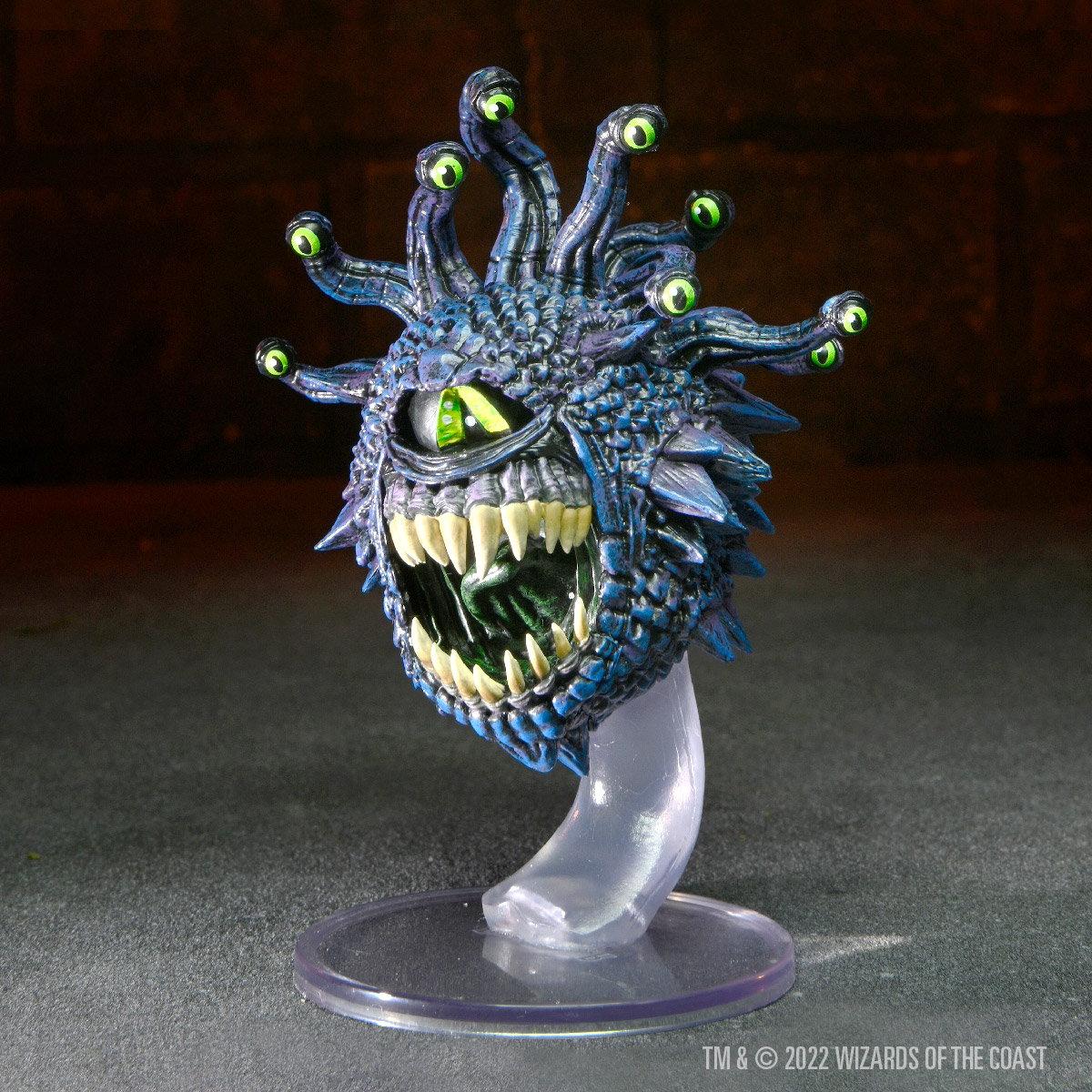
I experimented with a few very different color schemes before settling on the final version, including a rainbow pastel Beholder and and orangey-red one that looked rather like the Eye of Sauron. The one that I ended up going with though really captured my imagination. I chose the dark blue/purple combo with glowing green eyes as it felt like a fun take on the classic Beholder, but with a sinister twist. I pictured it floating through the Underdark, camouflaged in the darkness but for its glowing green eyes, guiding unwary adventures towards its dancing orbs of light to their doom.
Q: What makes the Beholder such a fun model to paint?
I love everything about this model. The sculpt is fantastic and takes paint like a dream, whether you’re layering or shading or using a dry brush. Having painted a few of them now I can say it was a delight each and every time, and there are nearly endless opportunities for creative color schemes to suit your campaigns.
Q: What are some techniques that define your style?
My signature style tends to be wet blending color gradients and using many vibrant colors, though I love to experiment with different moods and styles in my miniatures. I’m a huge fan of using dry brushing techniques to quickly add detail and interest to a piece. Lately I’ve been enjoying limited palettes and using neutral tones, which can be striking especially on models where it is unexpected.
Q: Tell us about your creative process – do you start with a plan and stick to it or let the model guide you along the way?
I paint on instinct, which is a blessing and a curse. When I have a clear vision for what I want to create, I am often remarkably productive and can create a model I’m very proud of in a matter of hours. When I’m unsure, there can be a lot of meandering and experimenting and happy accidents (and sometimes a few more layers of paint than intended) before I get to a place I am content. Some of my most unique and interesting work has come from the frustrating process of tediously figuring out what I don’t want until I settle on what I actually do want.
Q: Do you have a favorite D&D memory?
I’ve been playing D&D for over a decade and have so many wonderful memories. I think one of my absolute favorites was a recurring NPC in a campaign that my husband DMed. His name was Potioini (pronounced po-she-nee), and he was a smarmy trickster potion seller whose arrival was always preceded by a swarm of spiders. Humorous and unsettling, he traveled about in a wacky caravan and would show up unexpectedly, sometimes for casual encounters and sometimes for events far more impactful on the main plot. The run-ins with Potioini were always amusing and surprising, and often included epic loot, but the best part was how our group, would be always on the lookout for him… and the sense of utter delight when he’d appear unexpectedly or we’d guess it was him. There’s just something so magical about a shared inside joke in the party, almost an easter egg, gave us a level of investment in the narrative that kept us all collectively searching for “that one guy we met that time.”
Q: What advice would you give to new miniature painters?
Pick miniatures that excite and inspire you. Don’t get caught up in “I’m not good enough to paint that yet” and accept that it is all a learning process and the more you practice and try new techniques and figure out what works for you and what your personal artistic style is, the better and better you will become. Don’t compare your work to others. Art is art and yours is special because it has your personal flair. On a more practical note… thin your paints. Clean and reshape your brushes well to make them last longer.
Q: What would you do if you encountered a Beholder in real life?
Run.