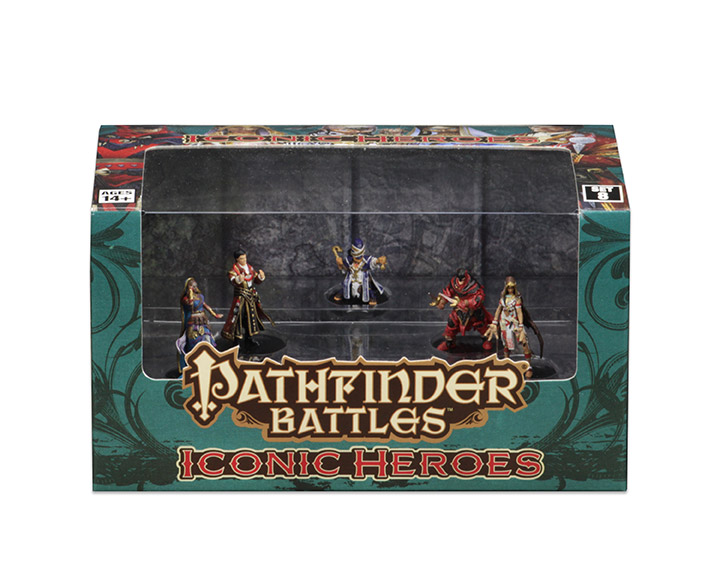
Iconic Heroes Set 8 is the latest release in the Pathfinder Battles series of pre-painted plastic miniatures from WizKids and Paizo Inc.
iconic-heroes8-04-2

Pathfinder Battles: Iconic Heroes Set 8

Overview

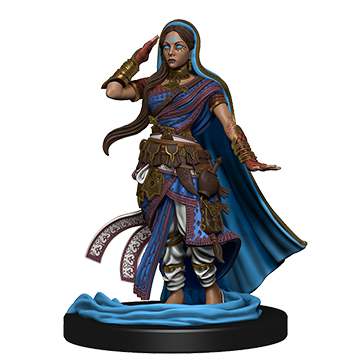
Pathfinder Battles: Iconic Heroes Box Set VIII includes five all-new miniatures featuring famous personalities from the Pathfinder role-playing universe: Zova, Human Shifter, Aric, Human Noble, The Red Raven, Human Vigilante, Meligaster, Halfling Mesmerist, and Rivani, Human Psychic! Each of these miniatures is an all-new sculpt and will feature a dynamic pose, incredible detail and a premium paint job.

MSRP: $29.99   
SKU: 72413

Details

Release Date January 2018
Game Time 2+ Hrs
Ages 14+

All Characters – Set 8

Final paint colors may vary slightly on actual product. 
redraven-2


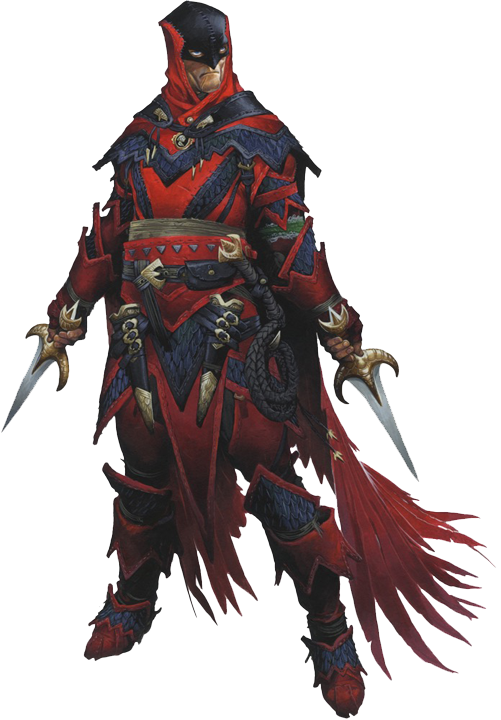
The Red Raven
Human Vigilante

Ho there, stranger! If you’re lookin’ for shelter on a cold night like tonight, you could do a lot better than that cursed Ledinthorp estate you were prowling ’round. Come ‘long. My daughters married and moved out ages ago—means we got a spare bed for a traveler who doesn’t know how to stay out of trouble when there’re Gray Gardeners keeping the peace.

You even know whose ruined home you were in? That once belonged to the old Ledinthorp clan. They played at being dukes and earls until the Revolution swept through in ’67 and lopped off their heads! I hear the nursemaid smuggled out the duke’s heirs before the mobs set fire to the place and made dresses out of the swanky curtains. Nobody’s had a mind to fix it up, and the only reason anyone goes there now is to look for the inheritance the duke supposedly hid in the walls. Course, if there’s any justice in the world, the Red Raven’s found it long since and given it out to help feed starving mouths in these tryin’ times.
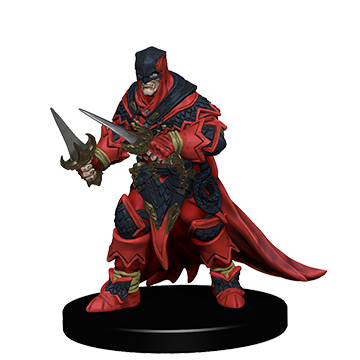
What’s that, stranger? Never heard of the Red Raven? That’s a right shame, and something of a surprise for folk ’round here. He’s famous—a hometown hero! Now I admit a lot of cities get to make that claim, but ’round here it’s true. He was born a common man to a couple down on Razor Street. Some even say that he’s the lost son of Darl Jubbanich, which would make the Red Raven the child of Liberty itself, raised by the common folk! But those were hard times; we were struggling with starvation inflicted by Galt’s hungry neighbors, and the dark legacy of those traitorous aristocrats still strangled our lands. Even so, he fed on the freedom of a liberated nation—that part’s exaggeration, mind, but it’s how the story goes—and grew up strong, proud, and gallant. And handsome! You’d believe me if you saw him. My, if I was forty years younger…

Oh, don’t give that look! At my age you’re allowed to speak your mind. Now, where was I?

Just about everyone ’round here’s seen the Red Raven from down the street or across the square as he pursues brigands and traitors. I’m lucky to have seen him eight times, myself. Why, he flies ‘cross the shingles as if his cape were feathers, soaring on wings of grandeur stained by the blood of them rotten nobles. The glow of old Galt’s torches’n’pitchforks can’t compare to that righteous hellfire smoldering in his eyes, hotter’n Asmodeus’s summer sweat! Course, what would you expect from someone whose passion for justice ignited from the sparks that flew from the first final blade? You know how our final blades all have ladies’ names? That’s ’cause they’re the only wives the Red Raven takes, and hardly a night goes by that he doesn’t bring home some bloody present for the missus. Har har!

Aww, loosen up, stranger. Jokin’ aside, my youngest, Anjerille, she was at a festival when the Red Raven dropped into the crowd and picked out a villain—said he could sniff out nobles by night just by following the stench of their perfumes. Oh, you laugh. I did too, but only a month later we learned that he has eyes so sharp that he can tell the difference between a cobbler and a count from three streets away with only a crescent moon for light. Now, my eldest, Redarra, is known to tell some tall tales, but given what else I’ve seen, I half take it as truth when she says he can taste a man’s bloodline back ten generations from just a single drop.

Who is he really? Anyone you ask will give a different answer. Some think he’s a common bandit turned good. Others say he’s a reformed noble seeking redemption. Me? I say he’s everyone in Edme, for we’re all willing to watch for aristocrats who think that after half a century it’s finally safe to return to Galt. Aristocrats who would sneak around a burned-down estate and walk away with a bag of jewels, like the one I fancy you’re carryin’ now. Blue-bloods with a face like yours—the same as old Duke Ledinthorp’s, whose head I watched tumble from Razor Jenni’s blade so long ago. The son of a dead dynasty like yours, scavengin’ what rightly belongs to the people of Galt. Who’s the Red Raven? He’s everyone we’ve passed tonight. He’s every set of eyes that’s seen us walking together. He’s the footsteps you hear patterin’ across the rooftops, fast as the heart of man who’s got only an hour left to live.

Best get runnin’ Your Excellency. The Red Raven knows you’re here.

redraven

Aric
Human Noble

Tumultuous Galt has captured the popular imagination—and noble nightmares—as blood-drenched anarchy dominated by unscrupulous demagogues, anonymous executioners known as the Gray Gardeners, frothing mobs that seek the destruction of a shattered aristocracy, and imposing guillotines known as final blades that drink the souls of the deceased. The madness has persisted for decades and consumed more than a dozen failed governments, claiming countless lives and shattering as many families—all in the name of liberty and the common good.

Aric was too young to understand why the Gray Gardeners came, dragging his parents into the night on charges of treason. He was too scared to watch as the final blade known as Madame Margaery descended twice, and he was too lonely to stop crying on the ride from the capital to his new home in the countryside. At Sister Sarinda’s Home for Revolutionary Orphans, he learned that he could not show too much anger, even when forced to work too many hours sewing garments sold by his pitiless caretaker, his wages garnished to supplement funds the revolutionary governments promised but rarely delivered. While food was scarce, he was fed a torrent of “true” Galtan values that changed with every coup.

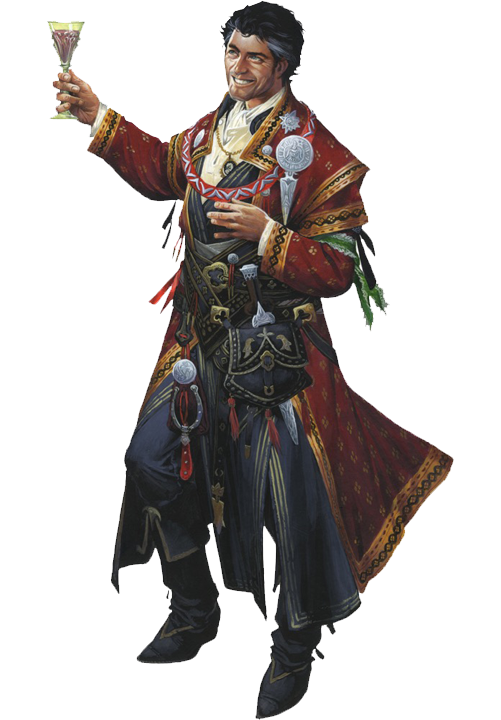
Like his fellow orphans, Aric eagerly absorbed these hateful lessons. However, where they believed themselves young revolutionaries who might sniff out traitors, he could not forget the cruel regime that had killed his parents and changed his life. He instead likened himself to the folk heroes of legend who served the common people at the expense of foul nobles. And so he ran away to live out his reckless fantasy.

He didn’t find freedom so much as bandits found him. Fortunately they also found young Aric’s dream amusing, and the aging leader Thanarus accepted the boy as his protégé. As Aric quickly learned, the bandits were not unprincipled thieves; the Revolution had wronged every one of them, much as it had wronged him. As a former knight who had seen the anarchy consume everything he held dear decades before, Thanarus had suffered longest of all. Nonetheless, he had upheld the old oaths of conduct sworn so long ago, and instructed Aric in the ways of mercy and morality, hoping to banish the hatred that burned within his pupil’s heart. Thanarus also taught him the arts of the battlefield, acknowledging that no amount of integrity could keep a man safe in their tumultuous land.

These relatively happy times could not last. The merciless eyes of the Gray Gardeners inevitably turned upon Thanarus and his daring exploits, capturing him and his followers just before Aric returned from an errand in Woodsedge. By the time Aric pushed his way into Isarn, Thanarus was already dead—one more spirit consumed by Madame Margaery, body unceremoniously thrown from the city’s crumbling walls, and victim of the current Revolutionary Council, known as the Council of Skulls. Aric waited until nightfall, chased away the scavengers, and buried his mentor by moonlight, keeping only the shredded cloak and ivory cameo of a bygone age that Thanarus had worn so proudly.

What followed was a blur of nights, weeks, and months spent seeking revenge against the council and Galt’s corruption. Aric—now garbed in scarlet and Thanarus’s cloak to hide his identity—tracked down and destroyed the Council of Skulls’ inner circle. Hardly a morning passed without some citizen discovering a dead senator being scavenged by gruesome ravens that cawed with pride. In time, the people of Galt gave this crimson killer a name: the Red Raven.

The Council of Skulls buckled under the Red Raven’s attacks and the demagoguery of their political rivals. The bloodthirsty mobs overthrew the regime and elected a new council headed by Citizen Korran Goss, who invited the red-garbed vigilante to help rebuild Galt and stop those who would perpetuate anarchy. At first the tasks were simple: deliver a message here and spy on a conspirator there. Then the requests grew in their violence: the breaking of an arm to send a warning or the apprehension of a traitor. Donning his mask gave Aric the courage to act and suppressed the mercy Thanarus had taught behind a faceless mien of unforgiving justice. As Citizen Goss’s requests grew increasingly bloody, Aric began questioning his own role and whether the Red Raven was truly serving Galt or merely perpetuating a new generation of hatred. By night, the Red Raven could bury these doubts. By day, Aric couldn’t help but voice his concerns, hoping to unearth some method behind the madness—or at least find true allies among the angry mobs. Driven by his passion and Thanarus’s training, Aric’s words began to find purchase in sympathetic ears. Unfortunately, they also reached the Revolutionary Council, and Citizen Goss quietly signed Aric’s death warrant, contacting the only man he trusted to apprehend the miscreant: the Red Raven.

With the signed orders in hand, the Red Raven set off across the city while grappling with the irony of his task: the capture of his secret identity by his masked guise. Questions coursed through his mind. How could he, the Red Raven, survive the night without sacrificing the seductive fame in which he reveled? How could he convince Citizen Goss to reconsider? At last, he paused atop a roof and tore the mask from his face. “How?” he asked. “How can I delude myself? The Red Raven was supposed to end tyranny, yet here I am the worst tyrant of them all.”

Citizen Goss awoke to delightful news. The knave Aric of Halvon had been captured and left on the front steps of the council building, and the Red Raven had left a personal note praying that Aric’s death would bring Galt one step closer to freedom. Goss cackled his approval when Aric’s sham trial delivered a guilty verdict, and congratulated himself when the Gray Gardeners threw Aric into prison to await execution. His mirth only faded when the Red Raven stopped answering his summons. There was no sign of the masked hero. Even the ashes of the vigilante’s incinerated costume had been swept from the street the day before. And in the prison Aric found peace.

However, not all were content to let another innocent fall to Madame Magaery, especially one so outspoken as Aric. In the dead of night, his cell door swung open, and an aging legal clerk by the name of Quinn extended a hand to help Aric to his feet. Together they fled south to Taldor, evading bounty hunters and exchanging tales of noble souls who had fallen prey to Galt’s bloodlust. Where guilt wracked Aric with memories of the lives he had taken, Quinn was resolute, dedicated to aiding the falsely accused no matter the price. Aric could not help but find strength in his savior’s words and actions. They parted ways soon thereafter, Quinn vowing to one day lay low the red-cloaked vigilante who had captured Aric. Aric in turn silently promised to uphold the ideals that Thanarus had taught him so long ago, and that Quinn had reinforced.

Aric has wandered ever since, wielding his courtly charms as an outspoken defender of liberty and peace. Thanarus’s cameo once more serves as a reminder of the virtues Aric hopes to uphold—and the cost of losing himself in a cycle of violence. Yet charisma cannot vanquish all evils. When nothing can stop an injustice but cold steel, Aric dons his recreated disguise, and the Red Raven flies once more.

aric
aric-2
zova-2


Zova
Human Shifter

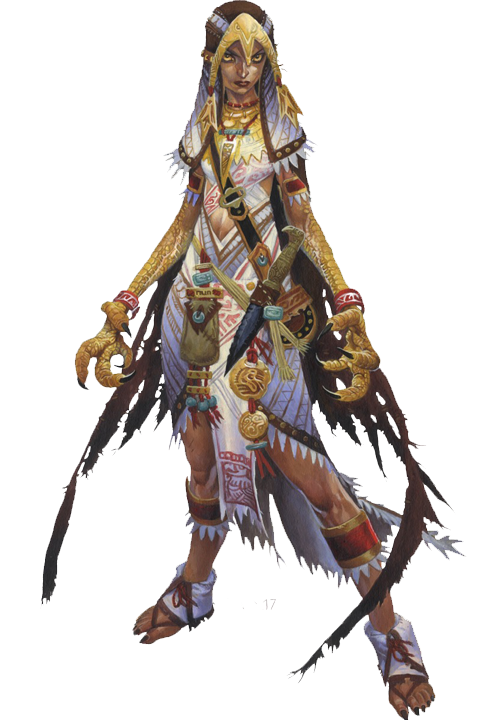
By the time she’d come of age, Zova had long known she didn’t fit in with the Clan of the Moon.

Although Zova’s parents loved her and supported her in all ways, she was still the only daughter among four siblings, and while she got on well with her brothers, she often felt left out. As Zova grew older, her parents’ Desnan teachings intrigued her, yet she felt a stronger kinship to the animals of the world than to the night sky above. In training for the hunt, Zova reveled in the act of stalking and pouncing like the animals she so empathized with, but she found herself impatient with her mother’s preferred method of hunting with the bow and struggled to train her own archery skills. In time, when her friends began to flirt and pursue romantic trysts, Zova realized that while she valued and greatly enjoyed the company of those friends, she felt no drive to find such a romantic partner for herself. Increasingly she found herself restless, curious about the world beyond the Cinderlands. She’d seen illustrations and heard stories of the vast oceans, glacial wonderlands, and above all else the wonders of the deep forest, but paintings and tales could not sate her curiosity. Where the Clan of the Moon’s territories in the arid west of the Cinderlands seemed to contain all the necessities of life for everyone she knew, Zova longed for the color green.

Zova’s parents saw it coming, of course, well before she made clear her intention to travel the world and seek its wonders. They worried for her safety, but they also knew that of all their children, Zova’s passion for life, her respect for the natural world, her keen perception, and her almost uncanny knack for getting the upper hand in a fight made her the best suited to leave the proverbial nest. Despite her awkward place in the clan, she still loved her family and adored her home, and promised to return as often as she could—and to bring stories of marvels from her adventures when she did.

She had no real plan or timetable to follow as she left the Cinderlands, knowing only that she wished to travel west, toward the oft-glimpsed lands of vibrant green she’d long been lured by. Whenever she felt homesick, Zova found she need only look to the sky to feel at home, knowing she gazed upon the same sights her family did. The moon was always there, a welcome and soothing constant in her life. As days turned to weeks, Zova found that nature itself was a more than adequate surrogate family, and more besides. Though she had always felt alone in crowds as a child, watching everyone else interact with each other, here in the natural world she felt like she belonged. The animals of the world were as companionable as anyone as long as they were treated with respect—and certainly more diverse and interesting as a whole than the people she’d known up to that point!

The Storval Rise presented Zova her first significant challenge. She knew of its existence, but had never seen the massive cliffs with her own eyes. Standing atop them, the sweeping expanse of greenery below seemed to taunt her—so near, yet so far. The carefree antics of falcons as they swooped out over the cliff filled Zova not with jealousy, but with inspiration. If only she could fly, she could join them in their graceful exits from the Cinderlands! But as she watched the falcons hunt and play, she felt her own perception grow keen, like a kinship with the raptors was waking in her vision. As if using a falcon’s eyes while gazing down the cliffside, Zova found that she could pick a treacherous but navigable path down the cliffs. She did not marvel at this—she accepted it with simple pride.

Despite her keen eyesight, Zova’s descent was fraught with peril. She nearly died thrice on the climb (twice to near falls, once to a redback rattlesnake she accidently stepped upon and was only just able to calm before it bit her), but late that night, as the waxing moon rose, she finally set foot into the Ashwood. Lit by the moon, the forest’s greens appeared almost black, yet Zova reveled nonetheless. Here was the world she’d dreamed of, a realm that she had to imagine back home in the scrubby Cinderland hills. For the remainder of the night and well into the next day, Zova sprinted and explored, climbed trees and delved into tangles of roots, hunted and played and delighted until she finally came to a toppled statue along the banks of a rushing river. She made camp in the shelter formed by the oversized statue’s moss-draped chin, and soon collapsed into exhausted sleep.

When she woke, it was deep night once again. The now-full moon’s light filtered through the canopy in pale beams, and while the ground was hard and the air was cool, it was the peal of an unearthly howl that had roused Zova from sleep. The howl was unlike anything she had ever heard—plainly the cry of an alpha wolf, yet carrying within it tones of malevolence and cruelty that felt far too human. Truly frightened for the first time in her life, Zova staggered to her feet and took her bow in hand, only to find campsite surrounded by a pack of the largest wolves she had ever seen.

For the first few moments, Zova’s arrows held the strangely aggressive pack at bay, but as the fight wore on, it became apparent to the wolves that Zova was no predator of note. Her arrows missed more often than not, and those lucky few that scored hits were only glancing blows. As she fought, Zova did her best to empathize with the wolves, only to realize in horror that a stronger will than her own imposed upon them. When the wolves finally overcame all fear of her archery, Zova threw aside her useless bow and reached for her knife—only to find she had lost it at some point during the previous night’s enraptured frolic through the woods. The wolves closed in, and Zova feared her journey was about to come to a sudden end.

Again that malignant howl scarred the night, and Zova could feel a presence approaching through the tangles. As the wolves closed their circle around her, she found herself hoping that the wolves would kill her before whatever hateful thing they obeyed arrived to finish the job. When the first wolf struck, she frantically swiped at it with her hand, a desperate attempt of self-preservation. For a few moments, she couldn’t understand what had caused the wolf’s yelp of pain and its sudden retreat. The other wolves had frozen as well, as if confused—a confusion that Zova felt as she looked down at her bloodstained hands… only to see that they were now bloodstained talons.

The will to survive rose in Zova, and with a snarl, she went on the offensive. She lunged at the next wolf, slashing across its snout with the birdlike talon that, a moment before, had been her hand. Again and again she cut and clawed, and the wolves, unsettled by her transformation, fell back. Zova became the predator, and as the last wolf fled, she held high her talons and cried out in triumph.

That cry was answered by the selfsame hateful howl. The master of the wolves had come. Zova whirled, raised her claws in a challenge, and froze in fear. What had emerged from the darkest part of Ashwood was neither person nor beast—nor was it strictly alive. A ghostly form, seemingly shed from moonlight itself, crouched in the air above, a towering man-wolf with orange eyes, fur that shimmered and wavered in unfelt wind, and teeth and claws of all-too-solid razor-sharp bone. Yet what the thing said was the crowning horror.

“Welcome, sister…”

Zova didn’t attempt to fight. She whirled and fled, never looking back as the mad howl of the ghost wolf pursued her. She clambered onto the toppled statue, sprinted across its brow, and plunged from its crown into the churning river below. Perhaps it was the current’s speed that saved her, or perhaps it was the ghost’s inability to pursue, or maybe it was just luck. Whatever the cause, Zova washed ashore a mile downstream, barely alive—but alive she was.

Zova never returned to the Ashwood. Those to whom she’s told her tale smirk in disbelief—not from claims of an encounter with a ghost wolf (for many parts of Varisia host stranger terrors than ghosts or werewolves), but that she had escaped to tell the tale at all. The legend of Loper, the ghostwolf of Ashwood, has frightened many listeners, for in most of these tales the victims are lucky just to survive. Zova never revealed to anyone the two words Loper spoke to her that night, yet she feels that in those two words lies the explanation of her escape. She vowed to some day return to Ashwood and solve this mystery—preferably in the company of a group of adventurers, for a faithful pack brings so much more to a fight than can a lone predator!

Until that day, Zova travels from town to town, exploring her growing power as a shifter and the confusing nature of adventuring party dynamics. Her protective nature is augmented by the compassion she feels for these all-too-often orphans, for she knows she is not the norm among her traveling companions in having a family who loves her and a home she can some day return to.

Yet on nights when the moon rises high and unwelcome dreams torment her sleep, Zova can’t help but wonder—are those she calls her brothers really her brothers at all?

zova

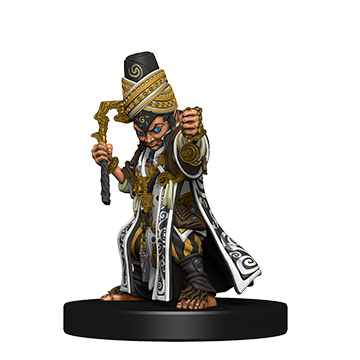
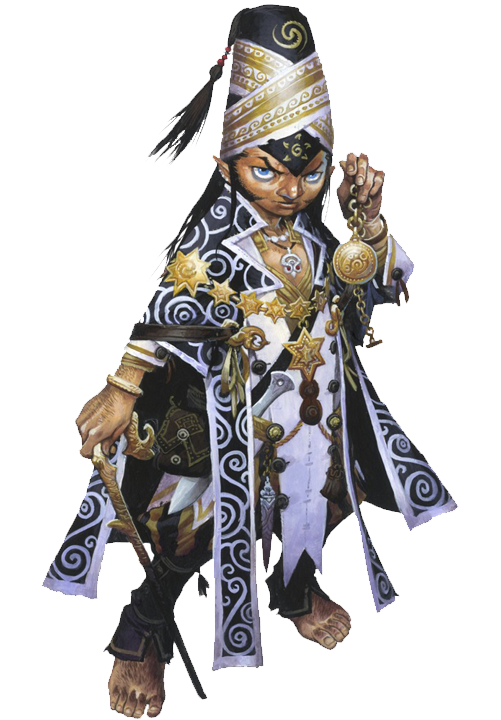
Meligaster
Halfling Mesmerist

From the fine tailoring of his immaculate suit to the gold handle of his elegant sword cane, little about Meligaster’s current appearance reveals his upbringing as a common slave. Born in captivity in the field house of a minor noble Lord Maskelyne in the devil-obsessed nation of Cheliax, Meligaster’s childhood saw him cast in the role of enforced plaything to a brood of aristocratic children. Even as his own brothers and sisters were torn away and forced into servitude at noble estates all over Cheliax, Meligaster found a new home as an adopted sibling of his master’s children, who treated him like a beloved living doll. While his aging mother toiled in the manor’s laundry, Meligaster sat at tea in gardens blooming with a profusion of exotic and colorful plants. The children dressed their “poppet,” as they called him, in stylish suits of silk and velvet, granting Meligaster an early appreciation for the finery of nobility so foreign to his true brothers and sisters, whom he began to forget as the years went on.

The young halfling soon found that he possessed a natural charm and wit that engendered an especial affection in his “hosts,” and even the elder generation of Maskelynes doted on him and offered him special privileges. At night, when the children went to bed and Meligaster returned to the “Sliphouse,” a ramshackle garrison for the family’s halfling servants, he regaled his fellow laborers with news of the goings on in the manor home. He wove vivid tales of rooms festooned with fine framed paintings, of beautiful baroque bronzes depicting the gods of Old Azlant, and chambers lined with bookshelves holding the accumulated knowledge of centuries. At first, Meligaster’s fellow slaves resented him for the better treatment afforded by the nobles of the house, but here again the halfling discovered that his charm, humor, and personal charisma were enough to get even the most hostile audiences on his side.
Despite the nice clothes and decadent meals, Meligaster remained a slave. He was forbidden from leaving the estate grounds alone, and on the rare occasion when he accompanied the children into town he did so with a fine silver chain around his neck. As the children grew older, tea parties evolved into wrestling and rough play, and the small stature that had so endeared him in years past became a liability. Now teenagers, the children began to view Meligaster as an old, unwanted toy. No longer did he receive a handsome new suit every fortnight. No longer was he welcome to sip sumptuous wine at the feasting table. To his considerable consternation, Meligaster began to take on a shabby appearance, and his change in status—subtle at first—undermined his cheer and good humor, which in turn served to further alienate him from his hosts.

At the same time, Lord Maskelyne’s political affairs in the nearby capital city of Egorian grew dire, and the family found its fortune much diminished. Things at the manor became much harder not just for Meligaster, but for all of the slaves and servants of the Sliphouse. As the fortunes of his fellow slaves grew worse, their attitudes toward him grew likewise darker and less charitable. Meligaster, formerly a friend to slave and master alike, soon found himself with no allies in an environment that grew more and more dangerous as the Maskelyne’s fortunes continued to decline.

On one particularly dreary day, while sitting at the bedside of his ailing mother, Meligaster found himself surrounded by a half-dozen halflings with scowls cut deep into their faces. Each held a field implement in tense hands, and Meligaster knew from a single glance that they had not come to wish the woman well. The Maskelyne children, Meligaster’s estranged playmates, had just that morning burned three particularly troublesome slips upon a pyre as a sacrifice to Mammon in hopes that the arch-devil would reverse their family’s fortunes, and the bedside visitors clearly meant to even the score by harming Meligaster. When his amicable pleas did nothing to curb the slaves’ threats, Meligaster looked deep into their eyes and funneled all of his charm and personal magnetism into that glance. His striking eyes had always managed to get him out of trouble in the past, and with great effort encouraged by desperation and fear for his mother’s life, Meligaster ordered the interlopers to return to the fields and leave him alone. To his surprise, the slaves quickly agreed, changing demeanor almost immediately. Minutes later he stood alone in his mother’s squalid chamber wondering just what had happened.

In the weeks that followed, Meligaster continued to explore this new power of persuasion. When he could not find a fellow slave on which to experiment, he looked into the rheumy eyes of his mother, whom he found to be most pliable to his commands. At the same time, Meligaster stole books on healing techniques from the Maskelyne libraries, and experimented with touch treatments designed to nurse his mother back to health. While he managed a few minor successes along these lines, he could see the kind, broken woman fading with each day. Eventually her eyes filled with cataracts and her mind grew weaker and weaker. At first, Meligaster took advantage of her failing defenses to strengthen his influence over her, commanding her to get healthier, but the woman eventually grew insensible. Soon he turned his experimental attention fully to the other halfling slaves of the Maskelyne estate, who were little match for his bolstered mental powers.

First, he used his fantastic stare to bind the bully-boys who had threatened him earlier into service as personal protectors. On his increasingly rare visits to the manor he surrounded himself with a coterie of tough protectors. When this drew the ire of taskmasters who naturally expected Meligaster’s defenders to attend to their assigned duties, Meligaster likewise brought them under his influence. Soon he had coerced the psychic allegiance of all of the Maskelyne’s slaves and overseers, who doted upon Meligaster and began treating him better than they treated their lawful masters.

Meligaster tired of the Sliphouse. It was time to make his move on the manor. By this point he had developed his mental powers to include the ability to cast psychic spells, which he used to great effect. First he bent his former playmates to his will, then the lord and lady of the house as well. Meligaster took up residence in a resplendent chamber within the home, sharing his room with his ailing mother and forcing the nobles to serve him as he and his mother had served them. Manipulating Lord Maskelyne into granting him generous gifts from the family’s dwindling fortune, Meligaster once more dressed in the finery to which he had become accustomed. He ordered the most celebrated craftsmen of Egorian to cut him a beautiful white suit and matching fez, accentuating his style with a locket medallion containing an ivory cameo of the only individual other than his mother than he had ever truly loved—himself.

For months Meligaster lived as the master of the house. When his charges—particularly among the Maskelynes—failed him, he responded with the pent-up cruelties of 20 years, subjecting them to the same whippings and tortures they had inflicted upon him. In time he grew used to being obeyed, and his perverse punishments extended to his fellow halflings, whom he began to think of as his own personal chattel. What once had been a playful sense of humor transmogrified into a cynical cruelty. When he grew tired of disciplining his inferiors, he manipulated their minds to make them the agents of their own humiliation and injury, and as he grew more comfortable in the seat of power, Meligaster began to enjoy these punishments. He soon became a harsher taskmaster than the Maskelynes had ever been, and while all residents of the manor claimed to love and adore him, not a one did so of his own free will.

Meligaster went to great lengths to conceal his reversal of fortune from the other nobles of the Egorian outlands. He received no visitors and closed the estate to the outside world. It came as a surprise, then, when he found himself in the company of a freed halfling slave named Lem, a charming bard who claimed to be an escaped slave born to the same mother. After decades apart, Meligaster looked into the eyes of his long-lost sibling, and what he saw broke his heart. Lem represented another way out of the grim subsistence of slavery. His brother was just as charming and charismatic as he, but even though Meligaster lived as a lord in his secluded manor, it was Lem who seemed at peace with himself. Worse, Lem was horrified by the scene of vacant-eyed halflings and humans that greeted him at the Maskelyne estate. He pleaded with Meligaster to abandon his ruse and run away with him to Absalom, but Meligaster would have none of it. In the presence of their failing, bed-ridden mother, the two brothers argued about the bonds of family. Meligaster summoned all of his psychic power and, gazing into the eyes of his brother, he commanded his visitor to abandon the Maskelyne estate and never return.

The following morning, Meligaster learned a powerful lesson about the limits of his power. He awoke to find Lem gone as he expected, but he also found that his brother had absconded with his frail mother, and that he had unshackled all of the halfling slaves as well, somehow using his magic-infused music to break Meligaster’s hold upon them. Angered at months of mistreatment at Meligaster’s hands, the slaves set the manor house ablaze, bringing a squad of Hellknights and neighboring lords to investigate the reclusive Maskelynes. Meligaster was forced to flee with little but the clothes on his back and a sack full of some of the Maskelyne’s greatest treasures.

In the year since, Meligaster has bounced from city to city, taking on short-lived jobs as a spiritual advisor to various nobles, whom he bilks of their wealth before moving on to another “sponsor” in a distant realm. Agents of Lord Maskelyne hound him at every stop, keeping the halfling constantly on the move and leery of laying down strong ties to any one location. Years of relying upon mental manipulation to get his way have considerably damaged his psyche, and while a part of him regrets the cruelties necessary to maintain the lifestyle he feels he deserves, he is loath to take a backward step, and seeks always the easier route to wealth and the finer comforts of success. After leaving behind him a trail of powerful enemies, Meligaster has, of late, turned to a life of adventure, finding it safer to pilfer from the tombs of dead lords and ladies than the drawing rooms and bedchambers of the living. He has never again seen Lem, and plots one day, when he is ready, to venture to Absalom and show his brother the folly of underestimating one who has total control over the minds of others.

meligaster
meligaster-2
rivani-2

Rivani
Human Psychic 

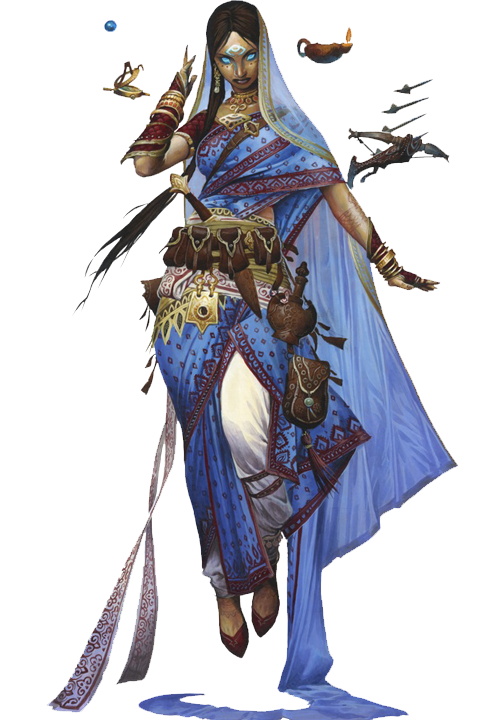
The path of the initiate is long and fraught with danger. For Rivani, the journey began as a young girl of 12 in the teeming city of Chendras, in the distant land of Vudra. Born the seventh daughter of a minor functionary in the court of a great rajah, Rivani seemed set to follow her sisters into a life of government service. Always a precocious child, Rivani took well to her studies, spending hours in her master’s library studying tomes she could barely comprehend. She especially favored lavishly illustrated accounts of harrowing victories over fantastic creatures, or voluminous surveys of distant lands and their many peoples, monsters, and mysteries. Rivani thrilled at imagining herself traveling to those distant lands as a questing hero, and soon these whimsical idylls consumed her every thought. As her revels grew more vivid, Rivani grew more distant from her sisters, putting her presumed future as a courtier at risk.

The rishis at court saw promise in the young girl’s whimsy, and implored the rajah to put Rivani to the Trial of the White Lotus, a simple test to determine a child’s mental aptitudes. After a series of intelligence and motor skill challenges, the rajah’s poets probed Rivani’s knowledge of the world’s esoteric nature. They were surprised to discover that Rivani’s reading had already set her on the path to spiritual development. She knew of the growth of the soul through reincarnation, of the astral body and the etheric double, and of the distant planes that house them. She knew also the rudiments of ki, the energy force that binds all living things into a spiritual family. In terms of esoteric theory, Rivani knew more than most third-year chelas. A promising child, indeed.

But it all came down to the Trial of the White Lotus. Following the minor challenges, the rishis brought Rivani to a secret room within the onion dome of the rajah’s highest tower, and there revealed a lush garden of fabulous flowers and colorful plants. Here was a verris bulb from distant Kaladay, there a purple jonquil from mythical Hermea. A massive quanlum bush—identical to the specimen allegedly recovered by Khiben-Sald himself on the far planet of Castrovel—dominated a far wall, next to a collection of ghorus seeds floating in a nutrient tank. And at the center of the room lay a pedestal, and on that pedestal a simple white lotus—Rivani’s final challenge.

“Cast forth your mind,” the rishis bade her. “Merge your life essence with that of the flower and realize that you and she are but tongues of the same flickering cosmic flame.” Rivani closed her eyes and concentrated on regulating her breath, relying on techniques she’d read inscribed upon an archaic manuscript of palm leaves by a lost yogi brotherhood. With each exhalation, she pushed her consciousness deeper beyond her physical body into the scintillating emanations of ki that comprised her health aura. At first, Rivani wasn’t sure if she simply imagined that it was so, but when her mind conjured the thought of her aura touching upon that of the white lotus, she felt her spirit lighten, and a beatific calm overcame her.

Sensing a breakthrough, the rishis instructed Rivani to infuse her ki with that of the plant, to meld her mind with its animating force and open its closed petals. As she considered their instruction, Rivani pictured the bulb of the lotus opening one petal at a time. From within the flower glowed a coruscation of colorful energy Rivani inherently knew represented the force of life itself. It flourished within the tiny cup of the white lotus, but it burned with an intensity that echoed that of the sun. At that moment Rivani realized—not just read, but truly realized—that all life, hers, the flower’s, even the sun’s, were but aspects of the same glorious creation. As her conviction grew deeper, as the petals of the white lotus opened faster and faster, Rivani became aware that her mind also opened itself one petal at a time. Sweat dripped from her brow, threatening to distract from her spiritual unfoldment by reminding her of the limits of her physical body, but still Rivani delved deeper.

In her mind’s eye, Rivani stepped further and further into the light until she could no longer distinguish herself from the flower. But she felt other presences, too. The poets of the court were also part of the fabric of life, and Rivani brushed against their innermost thoughts without even meaning to. She saw their anticipation, their pride, their amazement at her unexpected power. She saw too their betrayals, their scandalous secrets, and their venal, immoral ambitions. Rivani had passed the Trial of the White Lotus, but none of the rajah’s rishis celebrated her victory.

Instead, certain that her unexpected foray into their consciousness had revealed secrets that could threaten their status at court, the rishis proclaimed Rivani a mahatma reborn, the vessel of a world teacher consciousness returned to Golarion to guide the people into a new age. Just not in Vudra.

With the blessings of a rajah nervous about his advisors’ tales of Rivani’s mind-reading prowess, the rishis dispatched their blessed student across the sea to the Isle of Jalmeray, there to further study among the adepts of the Houses of Perfection. Each of the that institution’s three monasteries welcomed their honored visitor from the East, but the Monastery of Unblinking Flame in particular seemed most eager to accept her into their ranks. Even as far away as Chendas, Rivani had heard tales of the Houses of Perfection and their “impossible” entrance trials. Steeling herself for the test of a lifetime, Rivani prepared, as her books instructed, to outwit an efreeti.

Instead, white-robed warrior monks escorted her to the monastery’s courtyard garden for an audience with Anandala, the order’s ageless sovereign. She denied Rivani’s entrance to study at the monastery, for she was to be a teacher, not a student. “Everything you could teach us you read in a book,” she said. “We have read books. Go out into the world and learn to live. Once you know something for yourself, come back to Jalmeray and teach us what you have learned.”

Thereafter, Rivani spent several months as a librarian’s assistant in Quantium before fleeing the city after becoming a pawn in the psychic espionage and infighting of the Council of Three and Nine. From there she ventured to Absalom, spending most of a year as a translator for the esoteric manuscripts department of the Forae Logos before conflict with a fellow librarian drummed her out on the streets. Although she still reads voraciously and is seldom found without a well-thumbed book or two, Rivani henceforth swore off finding the world’s secrets in musty libraries, and finally set out to make some discoveries of her own.

A life filled with so much travel has filled Rivani with a wanderlust that borders on fatalistic. Her relationships burn intensely but briefly, as she constantly guards against delving too deeply—accidentally or otherwise—into the minds of her friends and lovers. She seems always fixated on the next stop on her journey, and while of a generally kind nature and friendly demeanor, she takes it as a matter of faith that she will soon be moving on, and avoids long-lasting, deep connections with others. Rivani loves nothing more than to share stories of her travels and cultural explorations, and to receive the tales of others in return. Through all of this she’s begun to develop her own philosophy, but it will be many years, and many many more adventures to come, before she will be ready to share her wisdom with the world.

rivani